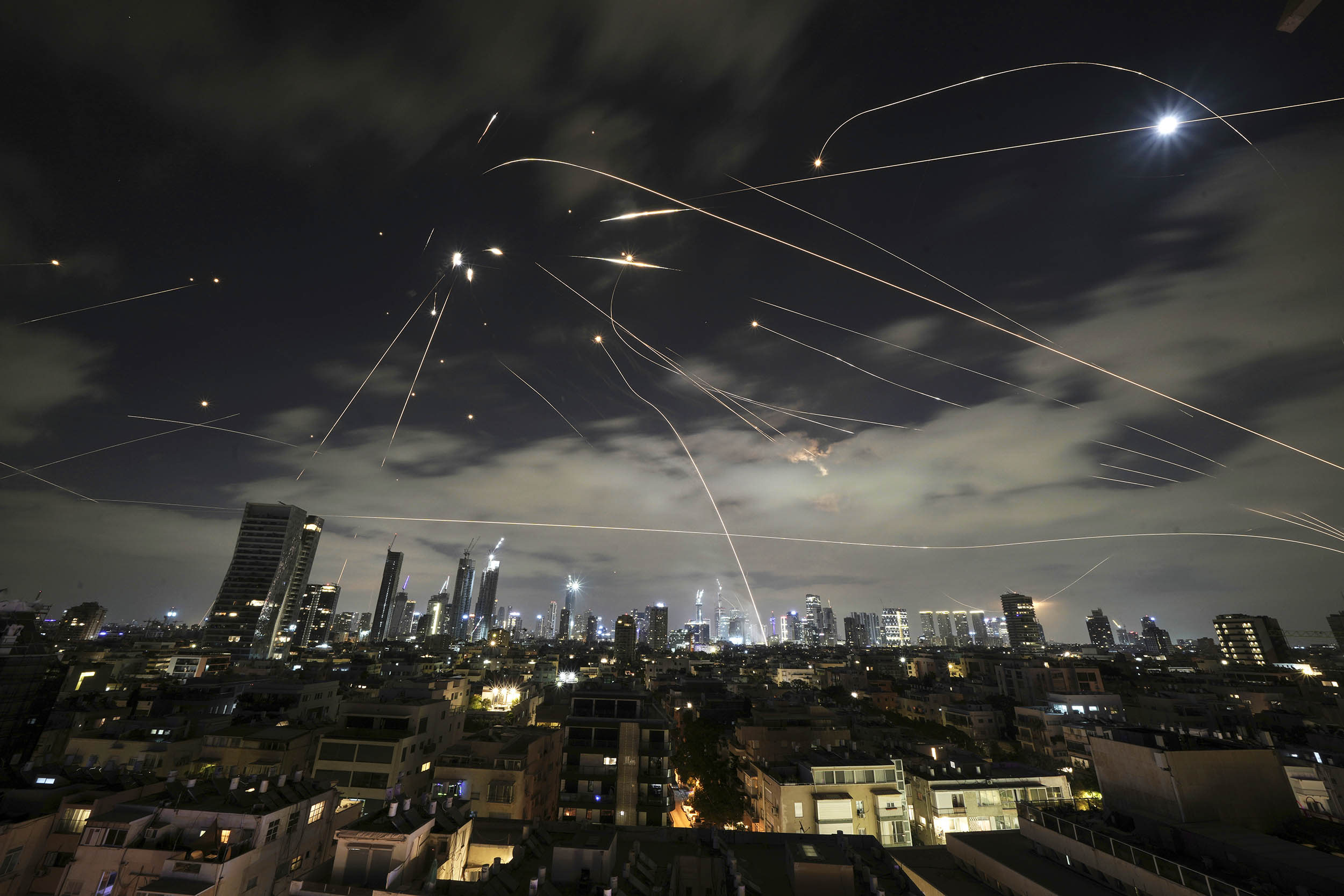
What began as a lightning campaign in February has spiraled, five months later, into one of the most volatile and unpredictable conflicts the Middle East has seen in years. The renewed war between the United States, Israel, and Iran has entered its ninth consecutive night of American airstrikes, and instead of winding down, the fighting is spreading — pulling in Jordan, Bahrain, Kuwait, and the vital shipping lanes of the Strait of Hormuz.
How We Got Here
The current phase of the conflict traces back to February 28, 2026, when Israel and the United States launched a coordinated series of airstrikes against Iran. That opening assault was devastating by any measure: it killed Iran's supreme leader along with numerous other senior officials, and destroyed a significant number of military and government sites, with civilian casualties as well. Iran responded in kind, firing missiles and drones at Israel, at American military installations, and at US-allied nations across the region. Tehran also moved to close the Strait of Hormuz, a chokepoint through which a huge share of the world's oil flows — a move that immediately rattled global markets and supply chains.
In the tense weeks that followed, President Donald Trump made America's position unambiguous, declaring in early March that there would be no negotiated settlement short of Iran's total capitulation. A ceasefire eventually took hold, but it proved fragile from the start. Iran's new leadership — the role of supreme leader passed to Mojtaba Khamenei following his father's death — has used the intervening months to rebuild and reportedly restructure its missile-launching capacity so that, in the words of Iranian officials, supplies would not run dry no matter how intensely the country fired back.
The Ceasefire Collapses
By mid-July, the fragile peace had unraveled entirely. A string of American service member deaths in Jordan triggered a new wave of US strikes, and what CNN described as a week of intensified bombing left the earlier truce in tatters, with no clear signal that either side intends to stand down. Iran's Revolutionary Guards have claimed responsibility for strikes on former US positions in Syria, framing them as retaliation for American attacks on Iranian territory — claims that news organizations, including CNN, say they cannot independently verify.
The rhetoric from Tehran has grown sharper as the bombing campaign has continued. Mohsen Rezaei, a senior IRGC official and adviser to the supreme leader, warned in mid-July that if American strikes persisted for a few more days, Iran would move into what he called a full-scale offensive. Iran's supreme leader has taken an equally hard line, declaring that Trump's word and signature are worthless given what he characterizes as repeated American violations of the memorandum previously signed between the two countries' presidents. Notably, Khamenei has not appeared in public since the war resumed, issuing his statements instead through written declarations carried by Iranian state media.
Nine Nights and Counting
As of this week, US Central Command has confirmed nine consecutive nights of strikes against Iran, describing the goal as continuing to degrade Iranian military capabilities. Iran has answered with fresh barrages of its own, including missiles aimed at the Jordanian city of Aqaba — a strike that came uncomfortably close to Israeli territory. Jordanian air defenses intercepted several of the incoming missiles, though at least one struck a remote area.
Israeli officials have made clear they see themselves as fully entwined in this fight, ceasefire or no ceasefire. Defense Minister Israel Katz stated plainly that Israel will strike back against any Iranian attack without hesitation or preconditions. The military's chief of staff, Lieutenant General Eyal Kamir, echoed that posture, saying Israeli forces stand ready to resume full combat operations and will act decisively against anyone who threatens the country.

The War Widens
Perhaps the most alarming shift in recent days is how far the conflict has spread beyond its original combatants. Sirens have sounded in Bahrain. Kuwait says it intercepted hostile targets in its airspace. Jordan reports it has downed additional Iranian missiles beyond the Aqaba incident. And in the waters of the Strait of Hormuz, a tanker was struck by a projectile roughly eight nautical miles off the coast of Oman, according to the UK Maritime Trade Operations center — a stark reminder of how exposed global shipping has become in the passage that carries a fifth of the world's oil supply.
Iran's Revolutionary Guards have gone so far as to describe the strait as now highly unsafe and effectively closed, though the practical reality on the water remains murkier, with vessels still transiting under evident risk. The disruption has already begun feeding into broader economic anxiety, as the conflict threatens to choke off a critical artery for global energy trade.

American Casualties and a Pentagon Under Scrutiny
The human cost to US forces has also become a flashpoint back home. The Pentagon has acknowledged that nearly 100 American service members have suffered some degree of injury since fighting resumed on July 7, though officials stress that the vast majority were minor concussions and that 96 percent of the wounded have already returned to duty. Still, the disclosure came only after a New York Times report alleged that the military had been slow to reveal the scale of American injuries — an accusation CNN separately corroborated, reporting that the Pentagon's delay was intended, in its telling, to protect service members' privacy and safety rather than to obscure the war's toll.
In response to mounting casualties and the widening front, the United States has been reinforcing its military posture in the region. A US official told CNN that Washington is increasing the number of fighter jets deployed to the Middle East as Trump weighs his next moves, while dozens of American refueling tankers have arrived in Israel in recent days, with more reportedly still incoming.
Voices of Caution
Not everyone in Washington is convinced that the bombing campaign will achieve its aims. Ryan Crocker, a veteran former US ambassador to several Middle Eastern nations, has publicly cautioned that trying to bomb Iran into submission is unlikely to succeed, a sentiment he said was echoed by others within the administration, including the vice president. His warning lands against a backdrop of growing uncertainty about what a durable resolution to the conflict would even look like, given the collapse of the earlier ceasefire and the hardening positions on both sides.
The State Department, for its part, has issued a worldwide caution advising American citizens — particularly those in or traveling to the Middle East — to exercise heightened vigilance as the war grinds on, a signal of how seriously US officials are treating the risk of further escalation or retaliatory attacks against civilians and diplomatic personnel abroad.
A Region Bracing for More
Beyond the direct US-Iran-Israel fighting, the broader regional picture remains tense. Israeli operations continue in both Gaza and Lebanon, where clashes with the Iran-backed militant group Hezbollah have persisted despite a separate ceasefire agreement reached between the Israeli and Lebanese governments. That earlier deal, struck in Washington, calls for Israeli forces to withdraw from two areas of southern Lebanon pending further negotiations — but implementation has been complicated by the wider regional conflict now underway.
Maritime security has also become a growing concern beyond the tanker strike near Oman. An Indian seafarer who went missing following an earlier attack on his vessel was confirmed dead, according to India's Forward Seamen Union, underscoring the human toll the conflict is exacting on commercial shipping crews caught in contested waters.
What Comes Next
Five months after the initial strikes and nine nights into the latest bombing campaign, there is little indication that either Washington, Jerusalem, or Tehran sees an off-ramp. Iranian officials themselves have suggested that negotiations remain possible — but only from a position of military strength, a bar that seems, for now, out of reach for either side. Meanwhile, the strain on global oil markets, the mounting military and civilian casualties, and the drawing-in of neighboring states like Jordan, Bahrain, and Kuwait all point to a conflict that has outgrown its original two-front framing and is now a genuinely regional — and increasingly global — crisis.
As strikes continue nightly and both sides trade warnings of further escalation, the coming days are likely to prove decisive in determining whether this becomes a prolonged war of attrition or edges toward a new, more durable ceasefire.